








Moving beyond a simple checklist of eco-friendly tips is the key to creating a truly sustainable garden. The secret isn’t in doing a dozen separate “green” things, but in building an integrated, self-sustaining ecosystem where every element works together. This is a practical guide to creating a holistic system that connects soil health, water conservation, and biodiversity. The result is a beautiful, resilient garden that saves you time, money, and becomes a thriving habitat for local wildlife.
The foundation of your ecosystem: building living soil
The difference between a struggling garden and a thriving one starts with the ground itself. Many of us start with “dirt”—a lifeless medium—when what we truly need is living soil, a complex web of microbial life, fungi, and organic matter that actively nourishes and supports your plants.
Mastering the art of composting for nutrient-rich soil
Composting is the single most powerful tool for transforming lifeless dirt into a productive, living foundation. It’s the engine of nutrient cycling in a sustainable garden.
A simple compost system is easy to start. In our garden, we started with a simple tumbler bin and found that adding shredded cardboard was the key to getting the balance right and preventing a soggy mess.
How to start a simple compost system:
- Choose your bin: This can be a purchased tumbler, a simple wooden crate, or even just a designated pile in a shady corner.
- Get the ratio right: Aim for a mix of roughly two parts “browns” (carbon-rich materials) to one part “greens” (nitrogen-rich materials).
- Add the right things:
- Greens: Kitchen scraps (fruit and vegetable peels, coffee grounds, eggshells), grass clippings, and plant trimmings.
- Browns: Shredded cardboard, crumpled paper, dry leaves, straw, and small twigs.
- Avoid these: Meat, dairy, oily foods, pet waste, and diseased plants, as these can attract pests and create odors.
Simply layer your greens and browns. Add water occasionally if it seems dry, and turn the pile with a garden fork every few weeks to aerate it. In a few months, you’ll have dark, crumbly, nutrient-rich compost to feed your soil.
Why mulching is a sustainable gardener’s best friend
Mulching is the practice of covering the surface of your soil with a layer of organic material, and it’s a cornerstone of sustainable gardening. It mimics the natural layer of leaf litter found on a forest floor, providing a cascade of benefits. A good layer of mulch will:
- Retain water: It acts like a sponge and reduces evaporation, cutting down on your water bills.
- Suppress weeds: It blocks sunlight, preventing most weed seeds from germinating.
- Feed the soil: As it breaks down, it provides a slow-release source of organic matter for worms and microbes.
Excellent organic mulch options include wood chips, straw, leaf mold, and grass clippings. Apply a layer 2-4 inches thick around your plants, being careful to keep it from directly touching the stems to prevent rot.
According to the Chicago Botanic Garden, these principles of sustainable gardening are key to creating a self-reliant system, and mulching is a critical component for building that soil health.
Getting started with no-dig gardening methods
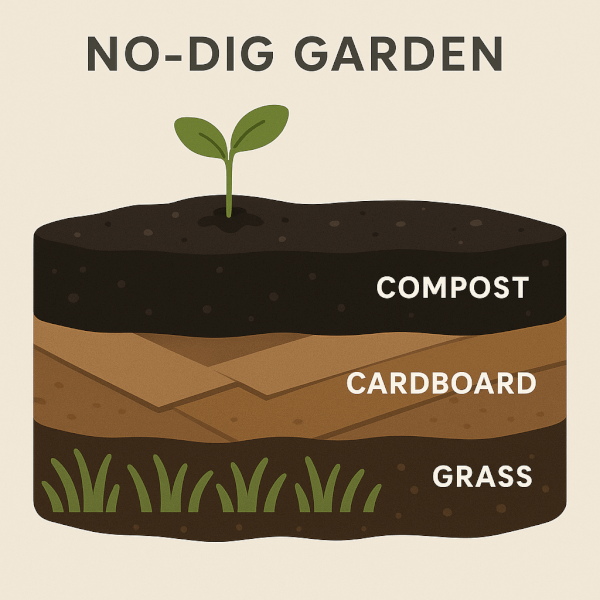
No-dig, or no-till, gardening is a method that protects the intricate structure and life within your soil. Every time we dig or till, we destroy the delicate fungal networks (mycelial networks) and the homes of beneficial organisms. No-dig methods avoid this, reducing your workload and creating healthier soil over time.
Creating a new no-dig bed is simple:
- Select your area: Choose a spot and mow or cut down any existing weeds or grass.
- Lay down cardboard: Place a layer of plain brown cardboard directly on the ground, overlapping the edges to ensure no light gets through. This is called sheet mulching.
- Add your compost: Pile a thick layer of compost (at least 4-6 inches) directly on top of the cardboard.
- Planting: You can plant directly into the compost layer immediately. The cardboard will smother the weeds below while slowly breaking down, and your plant’s roots will grow down through it into the soil beneath.
Smart water strategies for a resilient garden
Water is a precious resource, and a sustainable garden uses it wisely. By harvesting rainwater, delivering water efficiently, and choosing the right plants, you can create a garden that thrives with minimal irrigation.
How to harvest rainwater for a free, natural water source
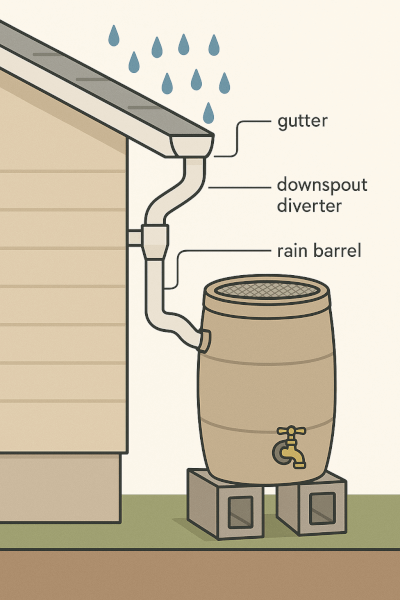
Harvesting rainwater is one of the easiest ways to make your garden more resilient and reduce your utility bills. Rainwater is naturally soft, slightly acidic, and free of the chlorine often found in tap water, making it perfect for your plants.
Setting up a rain barrel:
- Choose a location: Place a food-grade barrel on a level, raised platform (like cinder blocks) under a downspout from your roof. Raising it provides better water pressure.
- Connect it: Use a downspout diverter kit to channel water into the barrel.
- Ensure safety: Make sure the barrel has a secure lid and a fine mesh screen over the opening to keep out debris and prevent mosquitos from breeding. Install an overflow hose to direct excess water away from your home’s foundation.
This approach is a key part of many sustainable garden practices that save money and reduce your environmental footprint.
Choosing efficient irrigation: from drip lines to soaker hoses
Overhead sprinklers are notoriously inefficient, losing up to 50% of their water to wind and evaporation. Smart irrigation systems for the home deliver water exactly where it’s needed: the plant’s roots.
- Drip irrigation systems: These networks of tubes with small emitters release water slowly and directly to the base of each plant.
- Soaker hoses: These porous hoses “weep” water along their entire length, ideal for garden beds and rows of vegetables.
By watering the soil instead of the leaves, you not only conserve water but also help prevent common fungal diseases.
The power of right plant, right place: selecting drought-tolerant native plants
The most effective way to conserve water is to choose plants that are naturally adapted to your local climate. Native plants evolved to thrive in your area’s rainfall patterns, soil types, and temperatures, meaning they require far less supplemental water, fertilizer, and fuss once established. They are also the foundation of a healthy local ecosystem, providing essential food and habitat for pollinators, birds, and other wildlife.
Here is a sample of drought-tolerant native plants for different conditions:
| Plant Name | Sun/Shade | Wildlife Value |
|---|---|---|
| Purple Coneflower (Echinacea purpurea) | Full Sun | Pollinators, Birds (seeds) |
| Black-Eyed Susan (Rudbeckia hirta) | Full Sun | Pollinators, Birds (seeds) |
| Switchgrass (Panicum virgatum) | Full Sun to Part Shade | Shelter, Birds (seeds) |
| Wild Geranium (Geranium maculatum) | Part Shade to Shade | Pollinators |
| Pennsylvania Sedge (Carex pensylvanica) | Part Shade to Shade | Groundcover, Shelter |
Designing for life: how to cultivate biodiversity
A sustainable garden is a living habitat, not a sterile collection of plants. By designing for biodiversity, you invite nature in to become an active partner in your garden’s success, creating a space that is buzzing with life.
Planting to attract pollinators and beneficial insects
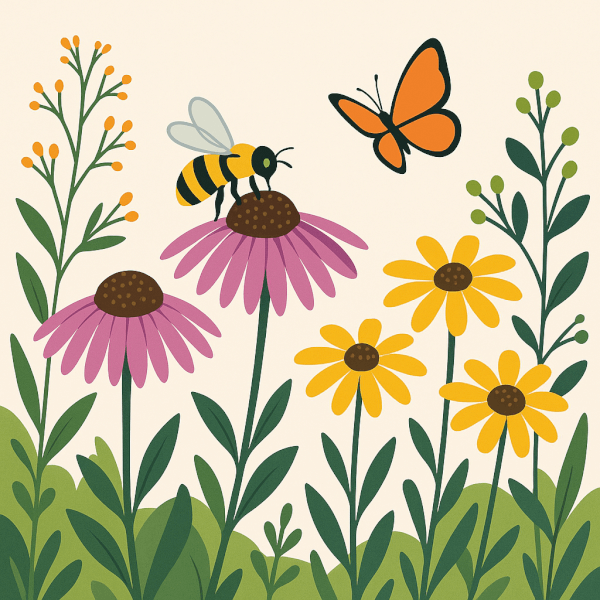
Pollinators are essential for the production of fruits and vegetables, while beneficial insects like ladybugs and lacewings are your garden’s natural pest control team. To attract them, you need to provide a reliable food source.
- Plant in drifts: Groupings of the same plant are more attractive to pollinators than single specimens.
- Offer variety: Choose plants with different flower shapes, sizes, and colors to appeal to a wide range of insects.
- Bloom across seasons: Ensure you have something flowering from early spring to late fall to provide a continuous food supply.
For expert-vetted guides on creating habitats, explore the resources for attracting pollinators and beneficial insects from The Xerces Society.
Creating simple habitats for a wildlife garden
Wildlife needs three things to thrive: food, water, and shelter. You can easily provide these on any budget. We added a simple log pile at the back of our border, and within a season, it was teeming with beneficial insects and provided shelter for frogs.
- Food: Native plants provide nectar, pollen, seeds, and berries.
- Water: A simple bird bath, a shallow dish with pebbles, or a small pond provides a critical water source for birds, bees, and other creatures.
- Shelter: A log pile for beetles, a patch of dense shrubs for birds, or leaving some perennial stems standing over winter offers vital protection.
Beyond the lawn: incorporating native meadows and groundcovers
The traditional, manicured lawn is often a “food desert” for wildlife, offering little in the way of food or shelter. Reducing your lawn size is a powerful way to boost your garden’s ecological value. Consider replacing sections with:
- Native wildflower meadows: These require minimal mowing and provide a beautiful, season-long display that supports a huge range of wildlife.
- No-mow lawn benefits: Even letting a section of your lawn grow long can provide shelter for insects and allow low-growing flowers like clover to bloom, feeding bees.
- Native groundcovers: Plants like wild ginger or sedges can create a lush, green carpet in shady areas where grass struggles to grow.
Working with nature: organic pest and disease solutions
In a balanced ecosystem, pests and diseases are rarely a major problem. By focusing on soil health and biodiversity, you create a garden where plants are strong and natural predators are abundant, keeping pest populations in check without resorting to chemicals.
Using companion planting to deter pests naturally
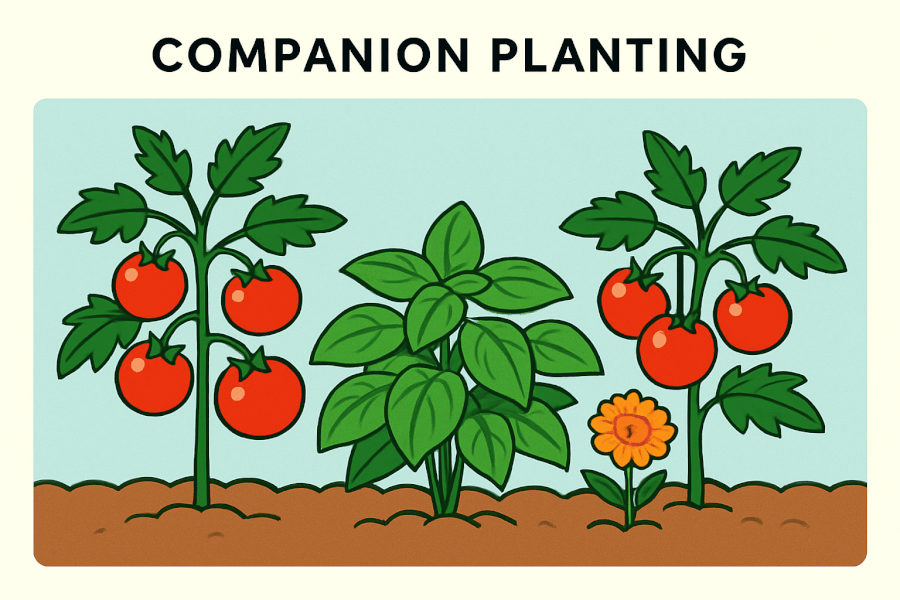
Companion planting is the age-old practice of pairing plants that benefit each other. Some plants release scents that repel pests, others can lure pests away from more valuable crops, and some attract beneficial predators.
- Marigolds: Their scent is known to deter nematodes in the soil and other pests above ground.
- Nasturtiums: Often used as a “trap crop,” as they are irresistible to aphids, luring them away from your vegetables.
- Basil: Planting basil near tomatoes is said to repel the tomato hornworm.
Encouraging natural predators as your garden’s security team
Your best defense against pests is a healthy population of their natural enemies. The predatory insects you attracted by cultivating biodiversity will become your garden’s security team. To keep them around, you need to provide them with food (nectar and pollen) and a few pests to eat. Plants with small flowers, like dill, fennel, yarrow, and sweet alyssum, are particularly effective at supporting these garden allies.
Simple, effective DIY organic sprays and treatments
If you do face a pest outbreak, there are simple, non-toxic solutions you can make at home. However, it’s crucial to view these as a last resort. A truly sustainable garden should handle most issues on its own. Even organic sprays can harm beneficial insects, so use them sparingly and apply them in the evening when pollinators are less active.
- Soapy water spray: A simple solution of a few drops of mild dish soap in a spray bottle of water is effective against soft-bodied insects like aphids.
- Milk spray: A mixture of milk and water (around 1:10) can help control powdery mildew on plants like squash and cucumbers.
Closing the loop: natural fertilization and weed control
In a sustainable garden, nothing is wasted. By “closing the loop,” you use the resources your garden produces to build fertility and control weeds, creating a self-sufficient system that doesn’t rely on outside inputs.
Feeding your soil, not just your plants
Instead of giving your plants synthetic fertilizers, focus on feeding the soil life that in turn feeds your plants. The best way to do this is by applying a 1-2 inch layer of finished compost as a top dressing around your plants each year. This provides a slow, steady release of all the essential nutrients your plants need. For an extra boost, you can brew “compost tea” by steeping finished compost in water and using the liquid to drench the soil.
Using green manures and cover crops
Cover cropping is a highly effective technique for actively building soil fertility. These “green manures” are plants, like clover, vetch, or rye, that are grown to be cut down and left on the soil surface or lightly incorporated. They serve multiple functions:
- Fixing nitrogen: Legumes like clover pull nitrogen from the atmosphere and store it in the soil.
- Adding organic matter: They contribute a large amount of biomass that feeds soil life as it decomposes.
- Preventing erosion: Their roots hold the soil in place, especially during winter.
These are excellent examples of climate-resilient gardening practices that build long-term soil health.
Effective weed suppression without chemicals
The most effective weed control is proactive, not reactive. The techniques already discussed are your first and best line of defense. A thick layer of mulch will stop most weeds from ever seeing the light of day. Planting densely shades the soil, giving weeds little room to grow. For areas that have become weedy, the sheet mulching technique with cardboard is the perfect way to reclaim the space without chemicals.
Frequently asked questions about sustainable gardening
How can I make my garden more eco-friendly?
You can make your garden more eco-friendly by focusing on three core areas: building healthy soil with compost, conserving water with rainwater harvesting and smart plant choices, and planting native species to attract wildlife. By treating your garden as a complete ecosystem rather than a collection of individual plants, you naturally reduce waste, eliminate the need for chemicals, and create a positive impact on your local environment.
What is the easiest way to compost for beginners?
The easiest way for beginners to compost is “cold composting” in a simple pile or bin, where you gradually add a mix of green (kitchen scraps, grass clippings) and brown (leaves, cardboard) materials over time without needing to turn it frequently. This method is slow but requires very little work. Just keep adding your materials, and nature will eventually turn them into usable compost with minimal intervention from you.
What do you put in a wildlife garden?
A wildlife garden should include three key elements: native plants for food, a clean water source like a bird bath, and shelter such as a log pile, dense shrubs, or a bug hotel. Native plants are the most important component, as they provide the specific nectar, pollen, seeds, and leaves that local wildlife has evolved to depend on. It is also critical to avoid all pesticides to ensure the habitat is safe.
What are the basic principles of organic gardening?
The basic principles of organic gardening are to feed the soil (not the plant) using natural materials like compost, avoid all synthetic pesticides and fertilizers, and work with natural systems to promote biodiversity and ecological balance. It’s a holistic approach that prioritizes long-term soil health and recognizes the interconnectedness of plants, insects, soil microbes, and wildlife.
Your garden as a holistic, self-sustaining ecosystem
A truly sustainable garden is far more than a list of eco-friendly tasks; it’s an integrated system where healthy soil, smart water use, and abundant wildlife all work together. By building this system, you create a garden that is resilient, low-maintenance, and beautiful. It saves you money on water and amendments, reduces your workload, and creates a thriving space that provides a profound connection to the natural world and a tangible benefit for the planet.
Ready to see these principles in action? Explore our guide to creating a pollinator garden to take the next step in building your backyard habitat.






