• About Us
  • Privacy Policy
  • Terms and Conditions
  • Contact
Sunday, December 14, 2025
GreenThumbChronicles.com
No Result
View All Result
  • Sustainable Gardening
    A schematic diagram showing the gradual, multi-year process of converting a traditional turf lawn into low-maintenance, resilient garden beds using a phased, tapered rollout strategy.

    The definitive garden trends 2025 guide: 10 strategies for a low-maintenance, climate-resilient landscape

    A clean visual guide contrasting properly stored potatoes with a potato that has turned green from sun exposure, which is toxic.

    How to grow potatoes: a definitive guide for beginners

    Greener Planet: Mastering the Art of Sustainable Gardening

    Greener Planet: Mastering the Art of Sustainable Gardening

    low-impact gardening techniques

    low-impact gardening techniques

    A clear visual comparison between a healthy, white plant root system and a brown, mushy root system suffering from root rot due to overwatering and poor drainage.

    What is the meaning of container gardening? your definitive guide

    resource-efficient gardening

    resource-efficient gardening

    eco-friendly pest control

    eco-friendly pest control

    soil health

    soil health

    permaculture principles

    permaculture principles

  • Plant Care Tips
    Thriving Not Surviving: Secrets to Mastering Indoor Plant Care

    Thriving Not Surviving: Secrets to Mastering Indoor Plant Care

    Enhancing Crop Resilience through Real-Time Monitoring

    Enhancing Crop Resilience through Real-Time Monitoring

    Enhancing Photosynthesis Efficiency

    Enhancing Photosynthesis Efficiency

    Natural Pest Control Strategies for Gardeners

    Natural Pest Control Strategies for Gardeners

    Winter Wonders: How to Protect Your Garden from Cold Weather Havoc

    Winter Wonders: How to Protect Your Garden from Cold Weather Havoc

    Fostering Sustainable Agriculture

    Fostering Sustainable Agriculture

    Revitalize Your Green Friends: Secrets to Successful Plant Repotting

    Revitalize Your Green Friends: Secrets to Successful Plant Repotting

    Unlocking Growth: Understanding the Essential Light Requirements of Plants

    Unlocking Growth: Understanding the Essential Light Requirements of Plants

    or Sand: Understanding the Ideal Soil for Various Plants

    or Sand: Understanding the Ideal Soil for Various Plants

  • Indoor Gardening
    Soil

    Soil

    Breathe Easy: The Best Air-Purifying Houseplants for Your Home

    Breathe Easy: The Best Air-Purifying Houseplants for Your Home

    Designing an Aesthetic and Functional Indoor Garden Space

    Designing an Aesthetic and Functional Indoor Garden Space

    Essential Supplies for Thriving Indoor Gardens

    Essential Supplies for Thriving Indoor Gardens

    The Impact of Material Choice on Indoor Plant Pots

    The Impact of Material Choice on Indoor Plant Pots

    Choosing the Best Indoor Plant Lights: A Guide to Healthier Houseplants

    Choosing the Best Indoor Plant Lights: A Guide to Healthier Houseplants

    Maximizing Your Space and Light: Essential Tips for Thriving Indoor Gardens

    Maximizing Your Space and Light: Essential Tips for Thriving Indoor Gardens

    Cultivating Serenity: Designing Tranquil Indoor Gardens

    Cultivating Serenity: Designing Tranquil Indoor Gardens

    Foliage and Function: Enhancing Your Home with Houseplants

    Foliage and Function: Enhancing Your Home with Houseplants

  • Pest & Disease Management
    Invasion in the Garden: Understanding and Managing Common Pests

    Invasion in the Garden: Understanding and Managing Common Pests

    Innovative Approaches to Sustainable Pest Control

    Innovative Approaches to Sustainable Pest Control

    Revolutionizing Recovery: Innovations in Stroke Rehabilitation

    Revolutionizing Recovery: Innovations in Stroke Rehabilitation

    Invasion of the Leaf Munchers: Tackling Common Garden Pests

    Invasion of the Leaf Munchers: Tackling Common Garden Pests

    Effective Solutions for Safer Environments

    Effective Solutions for Safer Environments

    Innovative Herbicide Application Techniques

    Innovative Herbicide Application Techniques

    Causes

    Causes

    Promoting Vigor and Vitality:Natural Solutions for Enhanced Plant Health

    Promoting Vigor and Vitality:Natural Solutions for Enhanced Plant Health

    and Long-Term Effects

    and Long-Term Effects

  • Gardening Tools & Equipment
    and Eco-Friendliness

    and Eco-Friendliness

    Sustainable Gardening: How to Select and Use Eco-Friendly Watering Cans

    Sustainable Gardening: How to Select and Use Eco-Friendly Watering Cans

    Revolutionize Your Gardening with Innovative Gear

    Revolutionize Your Gardening with Innovative Gear

    Revolutionizing Agriculture: The Latest Advancements in Planting Equipment

    Revolutionizing Agriculture: The Latest Advancements in Planting Equipment

    Top Picks for Ergonomic Gardening Equipment

    Top Picks for Ergonomic Gardening Equipment

    Digging Deeper: The Evolutionary Tale of Spades and Shovels

    Essentials of Comfort and Durability: Finding the Perfect Garden Gloves

    Mastering Maintenance: Essential Tips for Your Gardening Tools

    Dig Deep: Exploring the Impact of Advanced Soil Tools on Agriculture

    Dig Deep: Exploring the Impact of Advanced Soil Tools on Agriculture

  • Sustainable Gardening
    A schematic diagram showing the gradual, multi-year process of converting a traditional turf lawn into low-maintenance, resilient garden beds using a phased, tapered rollout strategy.

    The definitive garden trends 2025 guide: 10 strategies for a low-maintenance, climate-resilient landscape

    A clean visual guide contrasting properly stored potatoes with a potato that has turned green from sun exposure, which is toxic.

    How to grow potatoes: a definitive guide for beginners

    Greener Planet: Mastering the Art of Sustainable Gardening

    Greener Planet: Mastering the Art of Sustainable Gardening

    low-impact gardening techniques

    low-impact gardening techniques

    A clear visual comparison between a healthy, white plant root system and a brown, mushy root system suffering from root rot due to overwatering and poor drainage.

    What is the meaning of container gardening? your definitive guide

    resource-efficient gardening

    resource-efficient gardening

    eco-friendly pest control

    eco-friendly pest control

    soil health

    soil health

    permaculture principles

    permaculture principles

  • Plant Care Tips
    Thriving Not Surviving: Secrets to Mastering Indoor Plant Care

    Thriving Not Surviving: Secrets to Mastering Indoor Plant Care

    Enhancing Crop Resilience through Real-Time Monitoring

    Enhancing Crop Resilience through Real-Time Monitoring

    Enhancing Photosynthesis Efficiency

    Enhancing Photosynthesis Efficiency

    Natural Pest Control Strategies for Gardeners

    Natural Pest Control Strategies for Gardeners

    Winter Wonders: How to Protect Your Garden from Cold Weather Havoc

    Winter Wonders: How to Protect Your Garden from Cold Weather Havoc

    Fostering Sustainable Agriculture

    Fostering Sustainable Agriculture

    Revitalize Your Green Friends: Secrets to Successful Plant Repotting

    Revitalize Your Green Friends: Secrets to Successful Plant Repotting

    Unlocking Growth: Understanding the Essential Light Requirements of Plants

    Unlocking Growth: Understanding the Essential Light Requirements of Plants

    or Sand: Understanding the Ideal Soil for Various Plants

    or Sand: Understanding the Ideal Soil for Various Plants

  • Indoor Gardening
    Soil

    Soil

    Breathe Easy: The Best Air-Purifying Houseplants for Your Home

    Breathe Easy: The Best Air-Purifying Houseplants for Your Home

    Designing an Aesthetic and Functional Indoor Garden Space

    Designing an Aesthetic and Functional Indoor Garden Space

    Essential Supplies for Thriving Indoor Gardens

    Essential Supplies for Thriving Indoor Gardens

    The Impact of Material Choice on Indoor Plant Pots

    The Impact of Material Choice on Indoor Plant Pots

    Choosing the Best Indoor Plant Lights: A Guide to Healthier Houseplants

    Choosing the Best Indoor Plant Lights: A Guide to Healthier Houseplants

    Maximizing Your Space and Light: Essential Tips for Thriving Indoor Gardens

    Maximizing Your Space and Light: Essential Tips for Thriving Indoor Gardens

    Cultivating Serenity: Designing Tranquil Indoor Gardens

    Cultivating Serenity: Designing Tranquil Indoor Gardens

    Foliage and Function: Enhancing Your Home with Houseplants

    Foliage and Function: Enhancing Your Home with Houseplants

  • Pest & Disease Management
    Invasion in the Garden: Understanding and Managing Common Pests

    Invasion in the Garden: Understanding and Managing Common Pests

    Innovative Approaches to Sustainable Pest Control

    Innovative Approaches to Sustainable Pest Control

    Revolutionizing Recovery: Innovations in Stroke Rehabilitation

    Revolutionizing Recovery: Innovations in Stroke Rehabilitation

    Invasion of the Leaf Munchers: Tackling Common Garden Pests

    Invasion of the Leaf Munchers: Tackling Common Garden Pests

    Effective Solutions for Safer Environments

    Effective Solutions for Safer Environments

    Innovative Herbicide Application Techniques

    Innovative Herbicide Application Techniques

    Causes

    Causes

    Promoting Vigor and Vitality:Natural Solutions for Enhanced Plant Health

    Promoting Vigor and Vitality:Natural Solutions for Enhanced Plant Health

    and Long-Term Effects

    and Long-Term Effects

  • Gardening Tools & Equipment
    and Eco-Friendliness

    and Eco-Friendliness

    Sustainable Gardening: How to Select and Use Eco-Friendly Watering Cans

    Sustainable Gardening: How to Select and Use Eco-Friendly Watering Cans

    Revolutionize Your Gardening with Innovative Gear

    Revolutionize Your Gardening with Innovative Gear

    Revolutionizing Agriculture: The Latest Advancements in Planting Equipment

    Revolutionizing Agriculture: The Latest Advancements in Planting Equipment

    Top Picks for Ergonomic Gardening Equipment

    Top Picks for Ergonomic Gardening Equipment

    Digging Deeper: The Evolutionary Tale of Spades and Shovels

    Essentials of Comfort and Durability: Finding the Perfect Garden Gloves

    Mastering Maintenance: Essential Tips for Your Gardening Tools

    Dig Deep: Exploring the Impact of Advanced Soil Tools on Agriculture

    Dig Deep: Exploring the Impact of Advanced Soil Tools on Agriculture

No Result
View All Result
GreenThumbChronicles.com
Home Plant Care Tips

Everything you need to know about the red maple tree

A side-by-side comparison of the leaves of three red maple cultivars: October Glory (crimson), Red Sunset (orange-red), and Autumn Blaze (bright orange-red).

Red Maple Cultivars: A Visual Guide to Fall Color

Share on FacebookShare on Twitter

The red maple, or Acer rubrum, is one of the most common and beloved deciduous trees in North America, and for good reason. It’s a tree for all seasons: heralding spring with its early red flowers, offering dense shade in the summer, putting on a spectacular autumn display, and adding structural beauty to a winter landscape. If you’re looking for a fast-growing, adaptable, and stunningly beautiful tree, the red maple deserves a top spot on your list.

From our direct experience helping countless homeowners choose the right trees, the red maple consistently ranks as a favorite. It’s not just about its famous fall color; it’s about its reliability and the vibrant life it brings to a yard. This guide will walk you through everything you need to know, from choosing a spot to long-term care, ensuring your red maple thrives for generations to come.

Table of Contents

  • Why choose a red maple for your yard?
  • How to plant your red maple for success
    • When is the best time to plant?
    • Choosing the perfect location
    • Step-by-step planting guide
  • Long-term care for a thriving tree
    • Watering
    • Fertilizing
    • Pruning
    • Common pests and diseases to watch for
  • Popular red maple cultivars to consider
  • Answering your top questions about the red maple
    • Are red maple roots invasive?
    • Is the red maple a messy tree?
    • Will my red maple have good color?

Why choose a red maple for your yard?

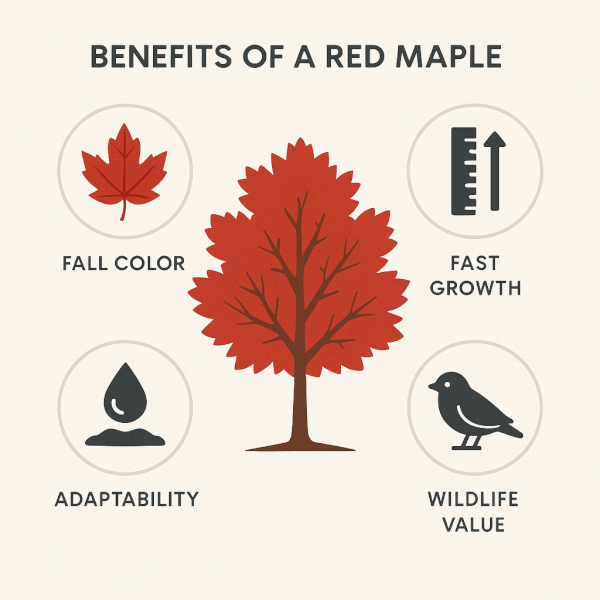
Infographic showing the key benefits of a red maple tree: Fall Color, Fast Growth, Adaptability, and Wildlife Value, represented by icons around a central tree.
Key Benefits of a Red Maple Tree

Deciding on a new tree is a long-term commitment, so it’s essential to understand the benefits. The red maple offers a compelling package of features that make it a standout choice for many landscapes.

  • Unmatched fall color: This is the red maple’s signature trait. Depending on the specific cultivar, soil acidity, and climate, its leaves can turn a brilliant scarlet, a fiery orange, or a deep burgundy. A mature red maple in full autumn color is a breathtaking sight that can become the centerpiece of your entire neighborhood.
  • Fast growth rate: For those who want shade or a mature-looking landscape without a decade-long wait, the red maple is an excellent option. It’s a relatively fast grower, typically adding between 13 to 24 inches of height per year. This rapid growth means you can enjoy the benefits of a substantial tree much sooner than you would with slower-growing species like oaks.
  • High adaptability: Acer rubrum is famously adaptable. It can tolerate a wide range of soil conditions, from sandy loams to heavier clays. While it prefers slightly acidic, moist soils, it’s resilient enough to establish itself in less-than-perfect locations. This adaptability makes it a viable option for a broad swath of gardeners across USDA zones 3-9.
  • Wildlife value: Planting a red maple is also a gift to your local ecosystem. The early-spring flowers are a vital source of nectar for pollinators when other food is scarce. The seeds, known as samaras, are eaten by squirrels and other small mammals, and the branches provide nesting sites for a variety of birds.

How to plant your red maple for success

Proper planting is the single most important factor in the long-term health of your tree. Getting it right from the start prevents a host of future problems.

When is the best time to plant?

The ideal time to plant a red maple is in the early fall. This gives the tree’s root system several months to establish itself before the ground freezes, without the stress of summer heat. Early spring, after the last frost, is the second-best option. Avoid planting in the middle of a hot summer, as the heat and potential for drought can severely stress a young tree.

Choosing the perfect location

Think about the mature size of the tree. A red maple can reach a height of 40-60 feet with a canopy spread of 30-40 feet.

  • Sunlight: Choose a spot that receives full sun to partial shade (at least 4-6 hours of direct sunlight per day). More sun generally leads to more vibrant fall color.
  • Space: Plant it at least 20-25 feet away from buildings, septic systems, and power lines to avoid future conflicts with its branches and roots.
  • Soil: While adaptable, its ideal home is in moist, well-drained, slightly acidic soil. If you have heavy clay or very sandy soil, amending it with compost can significantly improve its structure and nutrient content.

Step-by-step planting guide
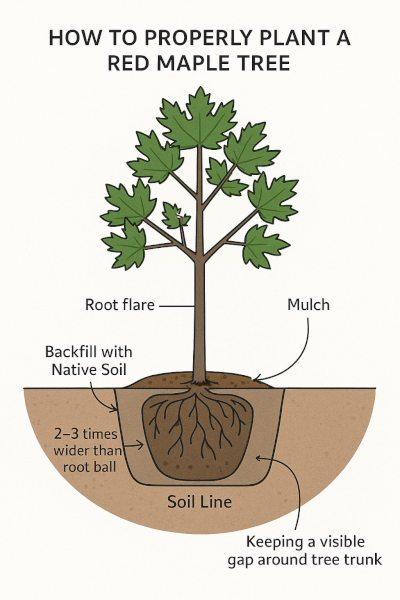
Diagram showing the proper planting technique for a tree, with the root flare above the soil line and a wide, shallow hole.
Proper Tree Planting Depth and Technique
  1. Dig the hole: Dig a hole that is two to three times as wide as the tree’s root ball but only as deep as the root ball itself. It’s crucial not to plant the tree too deep.
  2. Check the depth: Place the tree in the hole. The spot where the trunk flares out to meet the roots (the root flare) should be visible and sit slightly above the surrounding ground level. A common mistake we see is burying the root flare, which can lead to girdling roots and eventual decline.
  3. Backfill the hole: Use the native soil you removed to backfill the hole. There’s no need to add extensive amendments directly into the hole, as this can discourage the roots from growing out into the surrounding soil. Fill the hole about halfway, then water thoroughly to settle the soil and eliminate air pockets.
  4. Water again: Once the water has soaked in, finish backfilling the hole. Create a small berm of soil around the edge of the planting hole to form a watering basin. Water the tree again deeply.
  5. Mulch: Apply a 2-3 inch layer of organic mulch, like shredded bark or wood chips, over the planting area. Do not let the mulch touch the trunk of the tree; leave a small gap to prevent moisture buildup and potential rot.

Long-term care for a thriving tree

Once your red maple is in the ground, a little routine care will ensure it grows into a strong, healthy specimen.

Watering

A young red maple needs consistent moisture to establish its roots. Water it deeply once or twice a week for the first growing season, especially during dry spells. A good rule of thumb is to provide about 10 gallons of water for every inch of the trunk’s diameter. Once established (after 2-3 years), it will be much more drought-tolerant but will still benefit from a deep watering during prolonged heatwaves.

Fertilizing

You generally do not need to fertilize a red maple in its first year. In subsequent years, if the tree is showing slow growth or pale leaves, you can apply a balanced, slow-release fertilizer in the early spring. However, it’s best to perform a soil test first to see what, if any, nutrients are deficient.

Pruning
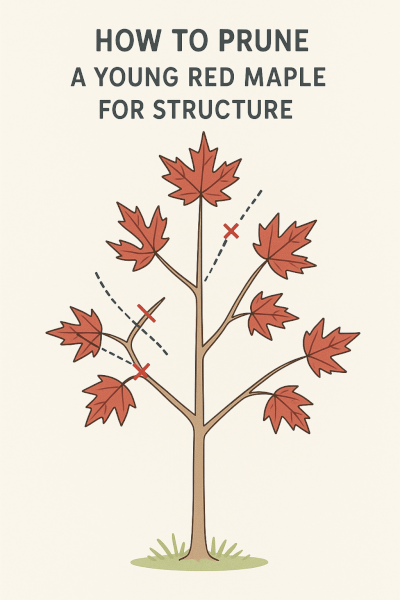
Illustration showing how to structurally prune a young maple tree, with dotted lines indicating cuts to remove crossing branches and establish a central leader.
Structural Pruning Guide for a Young Red Maple

The best time to prune a red maple is in the late winter or early spring when the tree is dormant.

  • Young trees: Focus on establishing a single central leader (main trunk) and removing any crossing or rubbing branches. This structural pruning sets the tree up for a strong future.
  • Mature trees: Only prune to remove dead, damaged, or diseased branches. Avoid removing more than 25% of the canopy in a single year.

Common pests and diseases to watch for

Red maples are fairly resilient, but they can be susceptible to a few issues. The most common problem is the Asian longhorned beetle, which can cause significant damage. Other potential pests include leafhoppers and scale insects. In terms of diseases, tar spot and verticillium wilt can occur. The best defense is a healthy tree; proper watering and site selection will help your maple resist most problems.

Popular red maple cultivars to consider
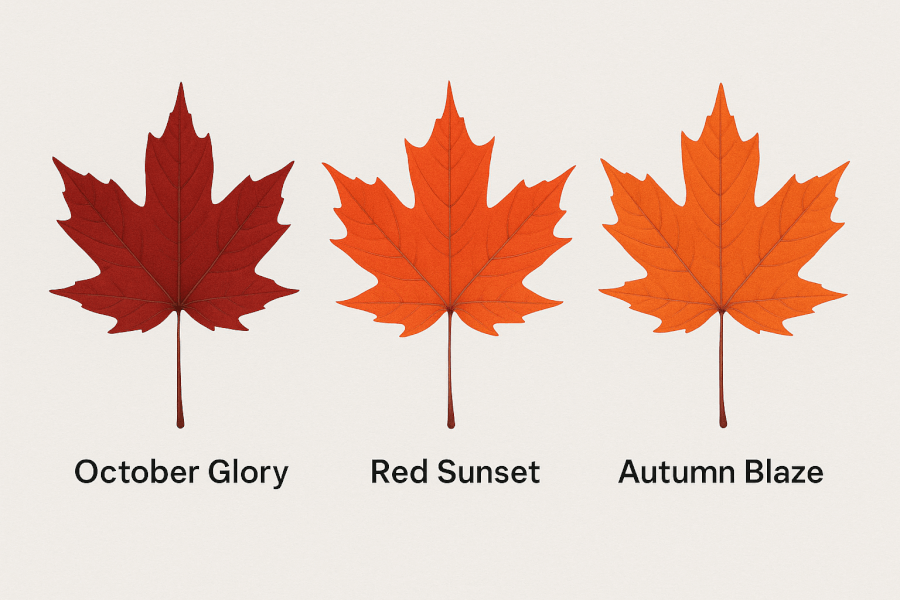
Visual guide comparing the fall color of three red maple cultivars: October Glory (crimson), Red Sunset (orange-red), and Autumn Blaze (brilliant orange-red).
Red Maple Cultivars: A Visual Guide to Fall Color

While the native Acer rubrum is fantastic, several cultivars have been developed to enhance specific traits.

  • ‘October Glory’: Famous for its brilliant crimson fall color that holds late into the season.
  • ‘Red Sunset’: Known for its intense orange-to-red fall color and strong branch structure.
  • ‘Autumn Blaze’: A hybrid of red and silver maples, it offers a brilliant orange-red color and a very fast growth rate.

Answering your top questions about the red maple

Are red maple roots invasive?

Red maple roots are shallow and can sometimes surface, especially in heavy clay soil. While generally not as aggressive as silver maple roots, it’s still wise to plant them a safe distance from sidewalks, driveways, and foundations to prevent any potential issues.

Is the red maple a messy tree?

It does drop flowers in spring, samaras (seeds) in early summer, and leaves in the fall. Some people may consider the samaras messy, but this is a characteristic of most large deciduous trees. The seasonal cleanup is a small price to pay for the tree’s year-round beauty and shade. As noted by horticultural experts at Treehugger, its benefits far outweigh this minor inconvenience.

Will my red maple have good color?

Fall color intensity is influenced by genetics, weather, and soil. For the most reliable color, choose a well-regarded cultivar like ‘October Glory’ or ‘Red Sunset’. Cool nights and sunny days in the autumn will produce the most vibrant display. Acidic soil also tends to enhance red tones.

The red maple is a true North American classic. It’s a tree that works hard for you, providing fast-growing shade, supporting wildlife, and, of course, delivering that unforgettable fall finale. By choosing the right spot and giving it a little care, you can add a landmark to your landscape that will bring you joy for decades.

ShareTweetSend

Related Posts

Growing Green: Harnessing the Power of Renewable Resources for a Sustainable Garden
Plant Care Tips

Green Thumbs Up: Essential Tips for Seasonal Plant Care

Optimizing Root Health
Plant Care Tips

Optimizing Root Health

Shedding Light on Growth: Essential Light Requirements for Indoor Gardening
Plant Care Tips

Shedding Light on Growth: Essential Light Requirements for Indoor Gardening

Aquaponics 4 You
ADVERTISEMENT
  • Optimizing Plant Growth: The Best Light Selection for Indoor Gardening

    Optimizing Plant Growth: The Best Light Selection for Indoor Gardening

    0 shares
    Share 0 Tweet 0
  • Trimming to Perfection: The Ultimate Guide to Choosing and Using Pruning Shears

    0 shares
    Share 0 Tweet 0
  • Unearthing the Secrets of Soil: Finding the Perfect Type for Your Plants

    0 shares
    Share 0 Tweet 0
  • Mastering the Art of Plant Pruning: A Guide to Healthy Growth and Stunning Results

    0 shares
    Share 0 Tweet 0
  • Shining a Light on Plant Care: Understanding the Importance of Proper Lighting for Healthy Growth

    0 shares
    Share 0 Tweet 0
GreenThumbChronicles.com

Welcome to GreenThumbChronicles.com! We provide expert advice and inspiration to help you create and maintain beautiful gardens. Discover tips, design ideas, and join our community of garden enthusiasts.

Categories

  • Gardening Tools & Equipment
  • Indoor Gardening
  • Pest & Disease Management
  • Plant Care Tips
  • Sustainable Gardening
  • Uncategorized

Recent News

and Eco-Friendliness

and Eco-Friendliness

Soil

Soil

ADVERTISEMENT
  • About Us
  • Privacy Policy
  • Terms and Conditions
  • Contact

© 2025 GreenThumbChronicles.com

No Result
View All Result
  • Sustainable Gardening
  • Plant Care Tips
  • Indoor Gardening
  • Pest & Disease Management
  • Gardening Tools & Equipment

© 2025 GreenThumbChronicles.com